
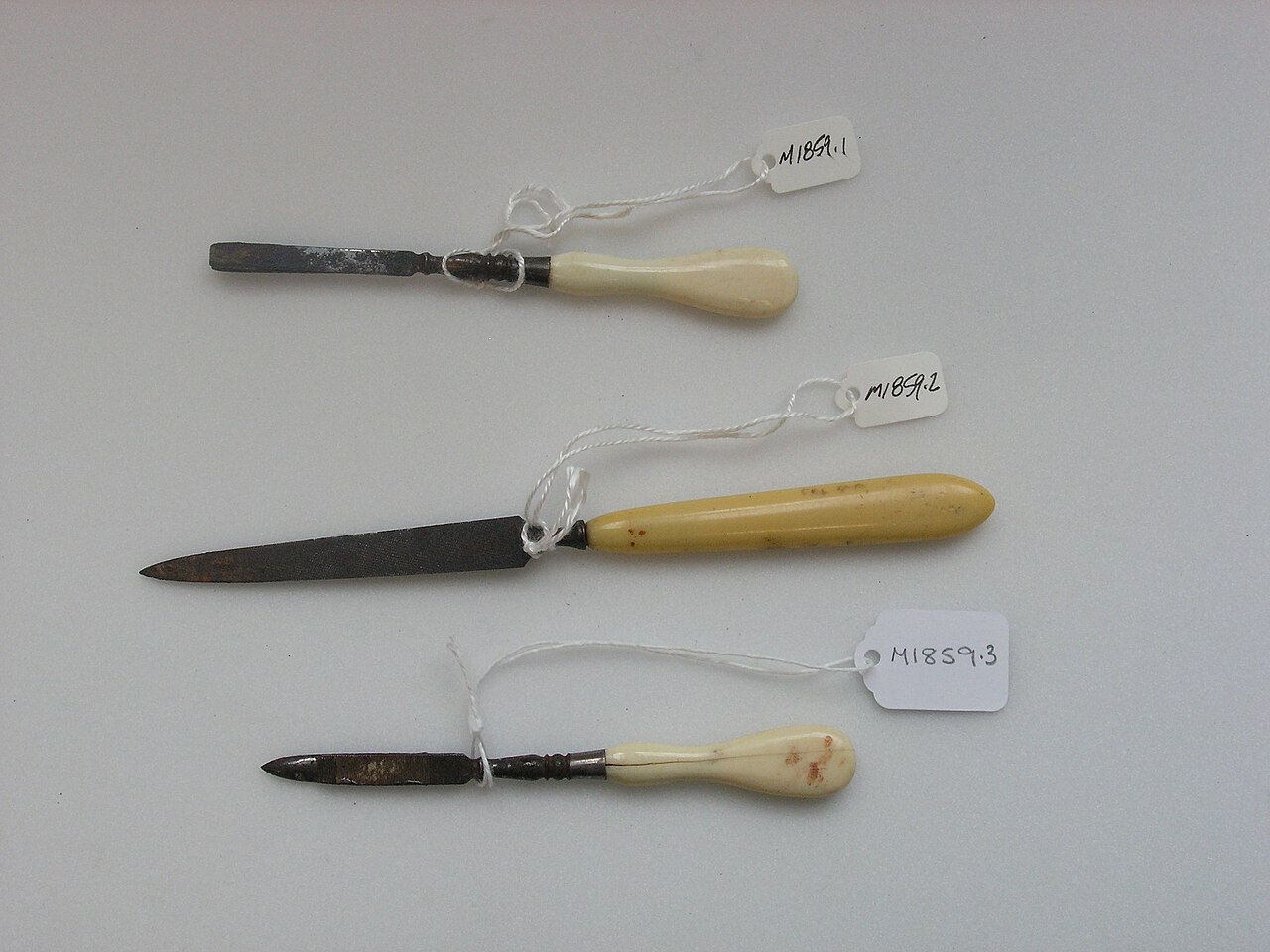
A neatly arranged manicure kit can still leave an important question unanswered: what has actually been done to each tool? Was visible debris removed, was an appropriate disinfectant used, or was the item processed through a validated sterilisation method? Those are different claims, and the difference matters more than how polished the tray looks.
Good tool care begins with accurate language and a workflow suited to the item. A reusable metal implement, a porous abrasive and a single-use accessory do not automatically belong in the same process. This guide explains the distinctions and the information to check, rather than prescribing one chemical recipe for every product or salon.
Name the job before choosing a product
Cleaning removes soil and other unwanted material. Disinfection reduces or inactivates specified microorganisms through an appropriate process, but does not necessarily eliminate all microbial forms. Sterilisation is a more demanding process intended to eliminate viable microorganisms, including bacterial spores. These definitions describe outcomes and procedures, not merely the strength of a smell.
The CDC’s definitions of cleaning, disinfection and sterilisation explain why prior cleaning, material characteristics and process conditions affect effectiveness. The source concerns healthcare terminology; it is useful for understanding the words, while salon practice must also follow the applicable professional rules and product instructions.
A useful comparison is washing paint from a brush before returning it to storage. Removing visible material is a distinct task from making a claim about microorganisms. The analogy stops there: a brush-cleaning routine does not establish an appropriate process for a manicure implement.
Sort tools by their intended reuse
Start with the manufacturer’s description. Is the item reusable? Which cleaning and processing methods does it tolerate? Does it have hinges, grooves or detachable parts that need attention? If the answer is unclear, do not assume that dipping it in a product makes it reusable.
Make a simple kit inventory with three columns: item, reuse status and approved processing instructions. Keep single-use items separate so they are not accidentally placed in the reusable tray after an appointment. A disposable label is about the item’s intended use, not whether it still looks attractive afterward.
For a small personal nail-art station, this can be a short card inside the storage box. For a salon, the process needs to fit its professional responsibilities and local requirements. The same visual organization can help both settings, but a personal checklist should not be mistaken for professional certification.
Build a one-direction tool flow
Arrange the workspace so used items move toward processing and processed items move toward protected storage. The useful principle is to avoid repeatedly crossing the same surfaces with clean and used tools. Labels such as “awaiting cleaning” and “ready for use” communicate status more clearly than two identical unmarked cups.
OSHA’s nail-salon biological-hazard guidance describes cleaning and disinfecting reusable tools, following manufacturer directions and storing processed tools in a clean covered area. It also distinguishes storage in UV boxes from actual tool disinfection. The presence of a light in a cabinet does not establish that its contents have undergone a validated process.
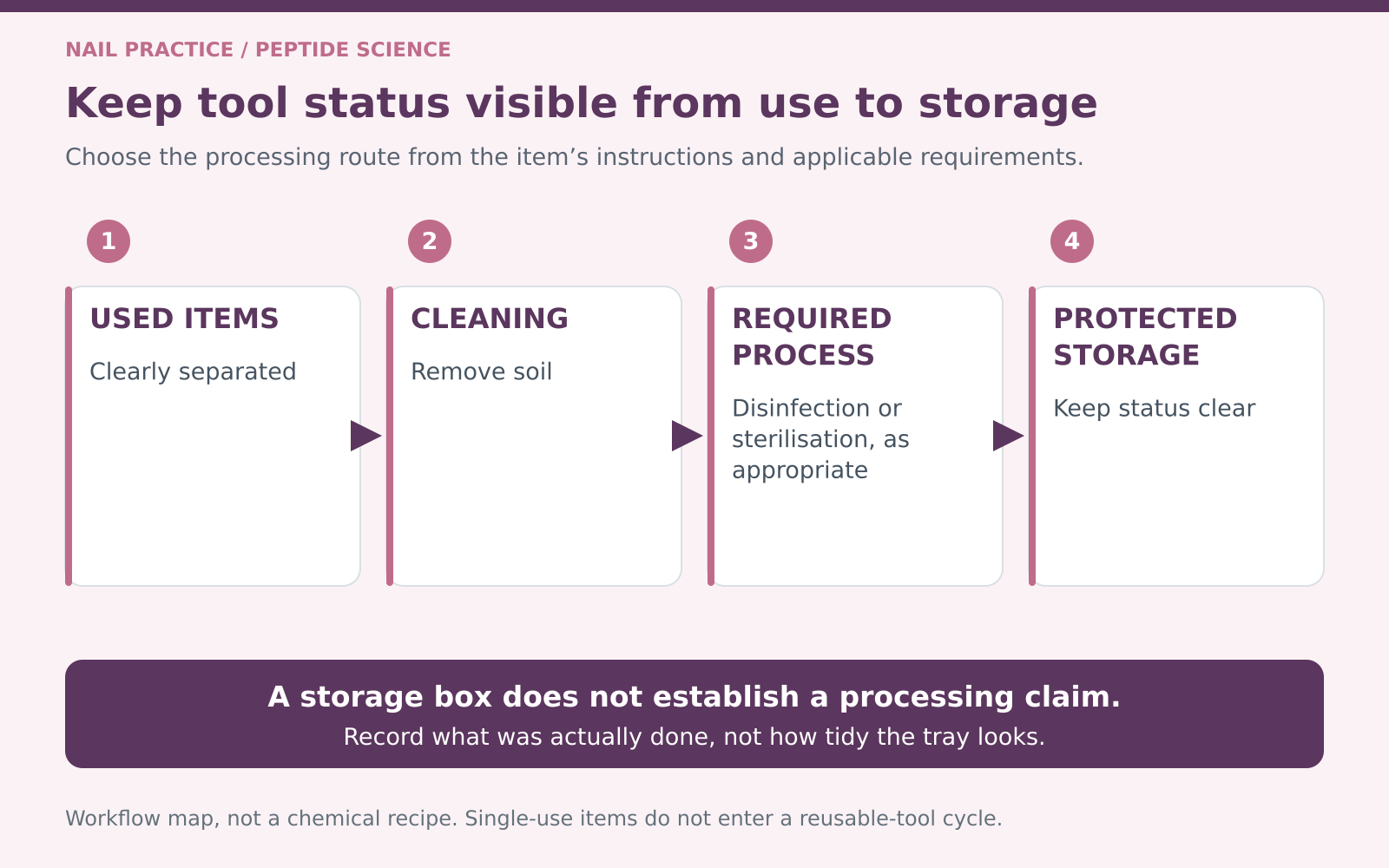
A practical station map has four areas: used items, cleaning, the required subsequent processing step and protected storage. The map is an organization aid; the actual method still depends on the tool and relevant instructions. If one area is missing, the operator may improvise an unsuitable shortcut or place used items beside ready ones.
Read the complete label, including time
A disinfectant’s identity is only part of its instructions. Intended surfaces, dilution where applicable, contact time and handling requirements matter too. Do not borrow a time from another product simply because the bottles look similar. More concentrated or longer exposure is not a universal improvement and may damage equipment or create other problems.
For a label-reading worksheet, copy the relevant instructions accurately and retain the original label. Record the product’s name, the items it is suitable for and the step that establishes the required contact. A splash followed by immediate wiping should not be described as compliant merely because the correct product was present.
Use the same care with words such as sanitiser, antibacterial and hospital grade. They should not be treated as interchangeable promises. The claim must be read in its actual context, including what the product is intended to do and how the user is instructed to achieve that result.
Protect the result after processing
Storage belongs to the workflow because a processed tool can contact a contaminated surface afterward. A clean covered container is only useful if hands, trays and other items do not repeatedly introduce used material into it. Avoid describing a container as sterile unless that status is actually established and maintained.
Consider a fictional nail-art session where a processed implement is put beside a used file while the desk is rearranged. Its earlier processing does not make the new contact irrelevant. The organization problem is the mixed-status surface. Clear trays and a consistent direction of movement are practical ways to reduce that ambiguity.
Keep damaged items out of routine circulation until their suitability is assessed. A corroded hinge, cracked handle or surface that cannot be cleaned as intended can complicate the process. Cosmetic appearance and process compatibility are separate questions; neither should be guessed from a quick glance.
Keep instructions accessible at the station where the task occurs. A product label stored in a distant cupboard is harder to consult at the relevant moment. If a container is decanted or relabelled under the permitted workflow, preserve the required identity and handling information rather than relying on the colour of the liquid.
Make the workflow easy to follow
Test the arrangement by following one tool from use to storage. At each transition, ask who handles it, where it rests and how its status remains clear. If the answer depends on remembering whether a particular tray was used earlier, add a simple marker or change the layout.
A brief record of the required process can support consistency, but a tick box is not the process itself. The goal is to make the right actions easy to perform and accurately described. A tidy checklist attached to an unsuitable method adds paperwork without solving the underlying problem.
Tool hygiene also introduces a wider biological topic. Skin is a living surface with microbial communities and its own protective molecules, including antimicrobial peptides. Understanding that biology starts with distinguishing everyday care from laboratory claims about particular organisms, molecules and measured effects.